Capital Market
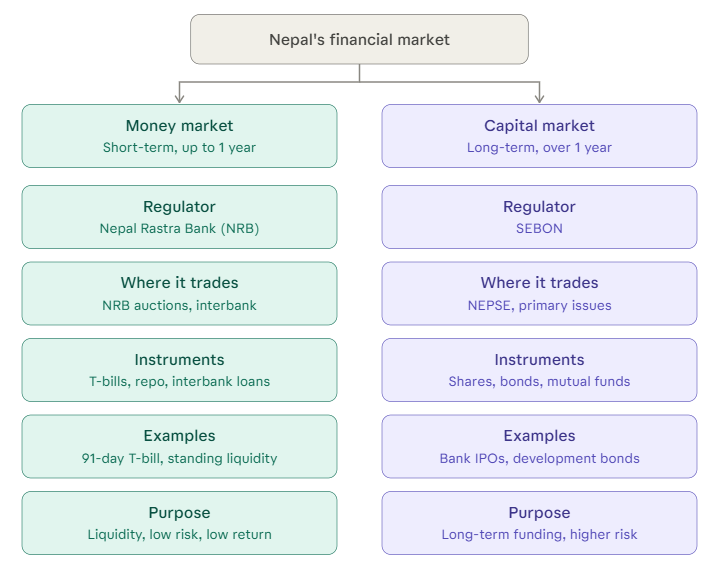
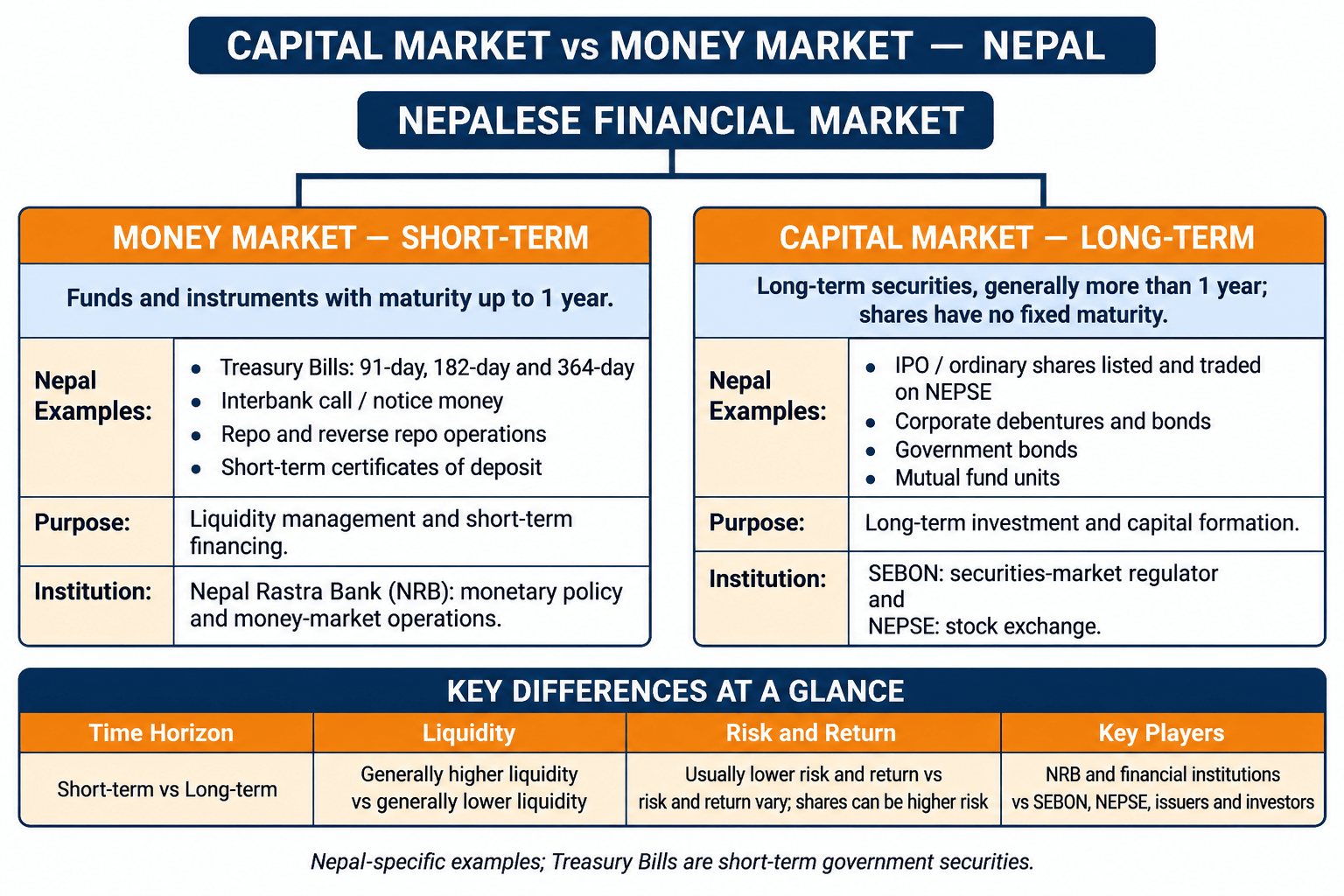
The capital market is a segment of the financial market system where long-term debt and equity securities are bought and sold. It includes both primary markets, where new securities are issued, and secondary markets, where existing securities are traded.
Characteristics of the capital market
- Involves long-term financial instruments such as stocks and bonds.
- Facilitates the transfer of capital from investors to businesses for expansion and growth.
- Operates through organized exchanges and the OTC market.
- Provides opportunities for investors to buy ownership (equity) or debt in a corporation.
- Key participants include individual investors, institutional investors, and corporations.
- Prices are influenced by factors like company performance, economic conditions, and market sentiment.
- Capital market investments are associated with higher risk and potentially higher returns.
- Promotes economic growth by supporting long-term investment and innovation.
Importance of the capital market
- Enables companies to raise capital for expansion and development.
- Facilitates investment diversification for individuals and institutions.
- Encourages economic growth by funding long-term projects.
- Enhances corporate governance through equity ownership.
- Provides a platform for price discovery and efficient allocation of resources.
- Provides potential long-term wealth through capital appreciation and dividends.
- Serves as a platform for venture capitalists to fund startups and innovative ventures.
- Allows companies to raise funds through bond issuance, complementing equity financing.
- Fosters innovation with the introduction of new financial instruments and investment products.
- Facilitates cross-border investments, enabling global participation in economic growth.
Money Market
The money market is the sector of the financial market where short-term debt securities are traded. It includes instruments like Treasury bills, commercial paper, and certificates of deposit. It allows governments, banks, corporations, and investors to borrow or lend cash for short periods with low risk and high liquidity.
Characteristics of the money market
- Deals with short-term financial instruments with maturities usually less than one year.
- Primarily involves low-risk, highly liquid securities.
- Offers a platform for short-term borrowing and lending.
- Participants include banks, financial institutions, and governments.
- Transactions are often conducted in the form of repurchase agreements and money market funds.
- Money market instruments serve as a source of short-term funding.
- Prices are relatively stable, and returns are generally lower than those in the capital market.
- Plays a crucial role in monetary policy implementation by central banks.
Importance of the money market
- Provides a mechanism for short-term liquidity management
- Supports the functioning of financial institutions and corporations.
- Enables governments to meet short-term funding requirements.
- Offers a low-risk investment option for surplus funds.
- Facilitates the implementation of monetary policy by central banks.
- Crucial for central banks to conduct open market operations, influencing monetary policy.
- Supports corporations and financial institutions in meeting short-term working capital needs.
- Money market instruments are low-risk, providing safe haven for capital preservation.
- Enables the government to raise short-term funds for immediate financial obligations.
- Facilitates efficient interbank lending, helping banks manage short-term liquidity positions.