Topic – Economics, Trade and Industry
1) A “Fiscal Deficit” implies
- Total trade deficit
- Excess of government expenditure over revenue
- Surplus
- Export decline
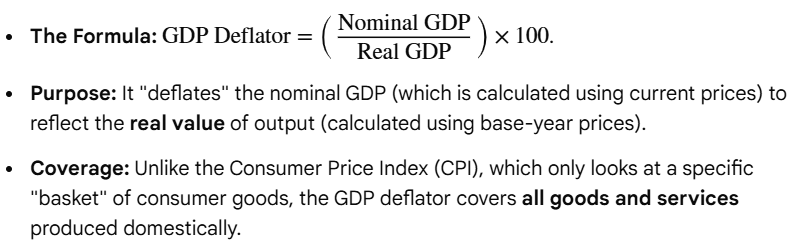
2) “GDP deflator” is used to
- Track employment
- Adjust nominal GDP to real GDP
- Measure imports
- Evaluate per capita income
3) A “Zero-Coupon Bond” pays
- Monthly interest
- No periodic interest, but issued at a discount
- Anual dividends
- Variable interest
4) What is the “Capital Adequacy Ratio” in banking?
- Capital buffer against risk-weighted assets
- Return on equity
- Total liabilities to assets ratio
- Liquidity index
5) What is hedging in finance?
- Betting on stock prices
- Speculative trading
- Reducing risk of adverse price movements
- Portfolio rebalancing
Hedging भन्नाले वित्तीय क्षेत्रमा असुरक्षित मूल्य परिवर्तन वा जोखिमबाट बच्ने उपाय हो। यसमा लगानीकर्ता वा संस्था आफ्नो परिसम्पत्ति वा ऋणको मूल्य घट्ने वा बढ्ने जोखिमलाई कम गर्न वित्तीय उपकरणहरू जस्तै फ्युचर्स, अप्सन, वा स्वाप प्रयोग गर्छन्। साधारणतया, यसले कुनै परिसम्पत्तिमा सिधा लगानी गरेर हुने सम्भावित नोक्सानलाई न्यून गर्छ र भविष्यमा हुने अनिश्चितताबाट सुरक्षा प्रदान गर्छ।
6) Which instrument is used for overnight borrowing between banks?
- Commercial paper
- Call money
- T-bill
- Certificate of deposit
- Call money is a very short-term loan (usually overnight) borrowed and lent between banks to meet temporary liquidity needs.
- The interest rate for call money is called the call rate.
7) “Inflation Targeting” is a policy adopted by
- Parliament
- Ministry of Commerce
- Central Bank
- Industrialists
8) The capital market includes
- Saving deposit
- Stock and bonds
- Currency exchange
- Demand deposit
9) A bond yield is
- Total price of the bond
- Return received from the bond
- Tax on bond income
- Market capitalization
10) A debt moratorium means
- Temporary suspension of debt payment
- Full repayment of debt
- Increasing debt interest
- New loan acquisition
During this period, the borrower is not required to pay principal or interest, giving them relief and time to stabilize their finances.
11) Public debt can be sustainable if
- Economic growth exceeds the interest rate
- Interest rate exceeds growth
- Debt receiving is delayed
- Fiscal deficit increases
12) Depreciation of currency leads to
- Expensive imports
- Cheaper exports
- Both 1 and 2
- None of the above
Appreciation of currency leads to cheaper imports and more expensive exports. मुद्राको मूल्य वृद्धिले (Appreciation) आयात सस्तो र निर्यात महँगो हुने प्रक्रिया यसरी हुन्छ: जब देशको मुद्रा विदेशी मुद्राको तुलनामा मूल्य बढ्छ, अर्थात् मजबुत हुन्छ, तब विदेशको सामान किन्न कम घरेलु मुद्रा चाहिन्छ, जसले गर्दा आयात सस्तो हुन्छ। अर्कोतर्फ, विदेशी खरिदकर्ताहरूको दृष्टिले हाम्रो वस्तुहरू महँगो हुन्छन्, किनभने उनीहरूले हाम्रो मजबुत मुद्रामा बढी पैसा तिर्नुपर्छ, जसले गर्दा निर्यात महँगो हुन्छ र निर्यात कम आकर्षक हुन्छ।
13) Which is the most significant challenge to the absorptive capacity of foreign aid in Nepal?
- High literacy
- Weak institutional capacity and governance
- Surplus skilled labor
- Low population growth
14) Which type of aid encourages the transfer of technology?
- Grant aid
- Humanitarian aid
- Technical assistance
- Budget support
15) What is the impact of foreign aid on Nepal’s balance of payments?
- Depletes foreign exchange
- Increase trade deficit
- Supports foreign exchange reserves
- Increase domestic inflation
16) The private sector in Nepal faces challenges mainly due to
- Over-regulation
- Excess funding
- Poor infrastructure and energy shortages
- Lack of demand
17) Which of the following foreign aid modalities is preferred for long-term development?
- Emergency aid
- Project aid
- Humanitarian aid
- Short-term credit
18) Nepal’s industrial growth rate has been hindered by
- Overinvestment
- Political instability and policy inconsistency
- Excess FDI
- High literacy rate
19) What is the “crowding out” effect in the context of foreign aid?
- Encouraging local savings
- Foreign aid is reducing domestic investment incentives
- Increasing exports
- Enhancing local entrepreneurship
The crowding out effect is an economic theory where increased government spending and borrowing reduce private sector investment.
20) Price ceiling causes
- Surplus
- Shortage
- Equilibrium
- Excess supply
21) The Laffer Curve explains the relationship between
- Tax rates and employment
- Tax rates and tax revenue
- Interest rates and investment
- Inflation and unemployment
22) The market structure is characterized by a single seller, which is called
- Oligopoly
- Monopoly
- Perfect competition
- Monopolistic competition
23) The marginal propensity to consume (MPC) is the fraction of additional income that
- Is saved
- Is taxed
- In spent on consumption
- In invested
- MPC (Marginal Propensity to Consume) measures the proportion of additional income that a person spends on consumption rather than saving it.
- For example, if your income increases by $100 and you spend $80 of it, then: MPC = 80/100 = 0.8
24) The substitution effect and income effect together explain changes in
- Supply
- Demand
- Price levels
- Costs
The Substitution Effect and the Income Effect are the two economic forces that explain the Law of Demand—specifically, why a change in price leads to a change in the quantity demanded.
1. The Substitution Effect
When the price of a good falls, it becomes relatively cheaper compared to other goods. Consumers will naturally “substitute” away from the more expensive alternatives and buy more of the cheaper good.
- The Logic: “This is a better deal than the alternatives, so I’ll buy more of this.”
2. The Income Effect
When the price of a good falls, your “real income” (purchasing power) increases. Even though your actual paycheck hasn’t changed, you can now afford more of everything because you have money left over from the price drop.
- The Logic: “I have more ‘buying power’ now, so I can afford to buy more.”
Topic – Banking and Finance
25) Which institution regulates cooperatives in Nepal?
- Nepal Rastra Bank
- Department of Cooperatives
- Securities Board
- Ministry of Finance
26) What is a bank run?
- Increase in deposit rates
- Panic withdrawal of deposits
- Sudden increase in share value
- Expansion of branches
27) What does a “non-performing loan” mean?
- A loan with fixed interest
- A fully repaid loan
- A loan with overdue interest or principal beyond 90 days
- A subsidized loan
28) Who regulates the securities market in Nepal?
- Securities Board of Nepal (SEBON)
- Nepal Rastra Bank (NRB)
- Ministry of Finance (MoF)
- Nepal Stock Exchange (NEPSE)
29) Which of the following is a component of monetary aggregate?
- Government subsidies
- Capital expenditure
- Narrow money (M1)
- Public debt
M1 (narrow money) includes currency in circulation and demand deposits.
30) What does “financial inclusion” aim to achieve?
- Increase GDP
- Provide access to financial services to the unbanked population
- Regulate insurance companies
- Eliminate the private bank
31) When the interest rate increases unexpectedly, the price of which bond will fall the most?
- 1-year bond
- 30-year zero-coupon bond
- Floating rate note
- Treasury bill
32) Which theory assumes investors require a premium for holding long-term securities?
- Expectation theory
- Liquidity premium theory (Liquidity Preference Theory)
- Segmented market theory
- Real business cycle theory
The Liquidity Premium Theory (also known as the Liquidity Preference Theory) suggests that investors prefer short-term securities because they are more liquid and carry less risk. To convince an investor to hold long-term securities, they must be compensated with a premium for the increased risk of price volatility and the “locking up” of their capital for a longer period.
33) What kind of risk arises when a bank’s assets and liabilities react differently to interest rate changes?
- Credit risk
- Mismatch risk (interest rate gap risk)
- Operational risk
- Sovereign risk
34) When a bond is sold at a discount, its yield to maturity is
- Lower than the coupon rate
- Equal to the coupon rate
- Higher than the coupon rate
- Zero
Simple logic (exam-friendly):
- Bond at par → YTM = Coupon rate
- Bond at premium (price > face value) → YTM < Coupon rate
- Bond at discount (price < face value) → YTM > Coupon rate
Why discount → higher YTM?
When you buy a bond at a discount, you:
- Get regular coupon payments, and
- Gain extra profit because the bond redeems at face value (higher than the purchase price).
That extra gain pushes the yield to maturity above the coupon rate.
35) The call rate in the interbank market refers to
- Interest paid to customers
- Stimulate economic activity
- Overnight lending rate between banks
- Treasury bill yield
36) A central bank may reduce the policy rate primarily to
- Control inflation
- Stimulate economic activity
- Decrease capital flows
- Increase currency value
37) Interest rate swaps are used primarily for
- Short-term speculation
- Managing interest rate exposure
- Increase leverage
- Hedging credit risk
38) Leasing is a form of
- Ownership financing
- Asset-based financing
- Trade credit
- Invoice discounting
39) What is subordinated debt?
- Equity
- Debt repaid after other obligations in case of default
- Bank loan
- Convertible debt
Subordinated debt = debt with lower priority in repayment
40) Convertible debenture offers
- Debt with equity option
- Non-convertible debt
- Preference share benefit
- Loan forgiveness
A convertible debenture is a type of debenture that starts as debt but gives the holder the option (or right) to convert it into equity shares of the issuing company after a specified period or under agreed terms.
41) Right issues allow
- Issuance to the public
- Existing shareholders to buy additional
- Government buyout
- Bonds to be converted
42) What is the primary source of finance for a start-up?
- Bonds
- Angel investors
- Preference shares
- Treasury bills
Angel investors provide early-stage funding along with mentorship and risk capital.
43) A company finances a new plant using a long-term loan. This is
- Internal financing
- External debt financing
- Retained earnings
- Equity investment
44) Factoring provides
- Equity capital
- Cash against receivables
- Tax shield
- Long-term security
Factoring is a financial service where a business sells its accounts receivable (debtors) to a factor (financial institution) and receives immediate cash, usually before the receivables are collected.
45) A high gearing ratio indicates
- Lower financial risk
- Dependence of debt financing
- Strong retained earnings
- High liquidity
A high gearing ratio means a company has a higher proportion of debt compared to equity in its capital structure.
46) Which of the following is not a source of equity financing?
- IPO
- Right Share Issue
- Term Loan
- Bonus Share Issue
47) The key benefits of debt financing over equity are
- Dilution of control
- Tax deductable in interest payments
- Permanent capital
- Dividend obligation
48) Which is a characteristic of money market instruments?
- High return
- High liquidity
- Long maturity
- High risk
49) Which of the following is a capital market derivative instrument?
- Treasury bill (Money market)
- Commercial paper (Money market)
- Forward contract (Derivative, but mainly OTC, and not specific tothe capital market)
- Stock options (Capital)
50) The secondary market provides which benefit?
- Raising fresh capital (Primary market does this)
- Liquidity to investors
- Setting interest rates
- Regulating banks
51) The term “Market Capitalization” means
- Number of shares traded
- Total market value of a company’s outstanding shares
- Market price of one share
- Capital raised by the company
51) Which of the following is a source of long-term finance in the capital market?
- Call money (Money market, very short-term)
- Commercial paper (Money market instrument)
- Equity shares
- Treasury bills (Money market instrument)
52) What does “dematerialization” in the capital market mean?
- Converting shares into physical certificates
- Converting shares into electronic form
- Issuing new shares
- Trading on the floor
Topic – GK and ICT
53) How many judges are there in the International Court of Justice?
- 10
- 12
- 13
- 15
54) What is the term of judges in the International Court of Justice?
- 5 years
- 6 years
- 7 years
- 9 years
55) How many articles are there in the Interim Constitution of Nepal, 2063?
- 123
- 133
- 167
- 153
It was promulgated on January 15, 2007 (Magh 1, 2063 BS) to govern the country during its transition following the 2006 People’s Movement and remained in effect until the current 2015 constitution was adopted.
56) Which plateau is known as the “Roof of the world”?
- Tibetian Plateau
- Colorado Plateau
- Bolivian Plateau
-
Laurentian Plateau
57) Which country has the most active volcanoes?
- Japan
- Indonesia
- Phillipines
- Italy
58) What is the term for a flat-topped mountain?
- Hill
- Mountain
- Butte
- Knob
Butte = समथर टुप्पो भएको पहाड
59) What does the sustainable development of society aim to achieve?
- Social inequality
- Balanced social progress
- Resource depletion
- Cultural erosion
60) There are two types of links supported in the NTFS file system
- Soft links and direct linking
- Hard links and direct linking
- Hard links and junctions
- Soft links and junctions
61) Full form of NTFS is
- New Technology File System
- New Transfer File System
- New Technology Folder System
- New Transform File System
FAT32 stands for File Allocation Table 32
62) ….. stores entries about files and their attributes
- File application table
- Format allocation table
- File access table
- File allocation table (FAT)
63) In MS Excel 365, which of the following is not a type of chart?
- Line chart
- Bar chart
- Pie chart
- Space chart
64) Where can one find the option to change a PowerPoint template?
- View
- Insert
- Design
- Home
65) An organization responsible for providing internet services to customers is commonly known as
- GIA
- ISP (Internet Service Provider)
- ICT/IP
- MIME
66) Which protocol is used to connect to the Internet over dial-up lines?
- SLIP
- Token Ring
- PPP (Point-to-Point Protocol)
- FDDI
67) Which of the following is not a web component element?
- <Shadow>
- <Menu>
- <Content>
- <Element>
Similar Sets